
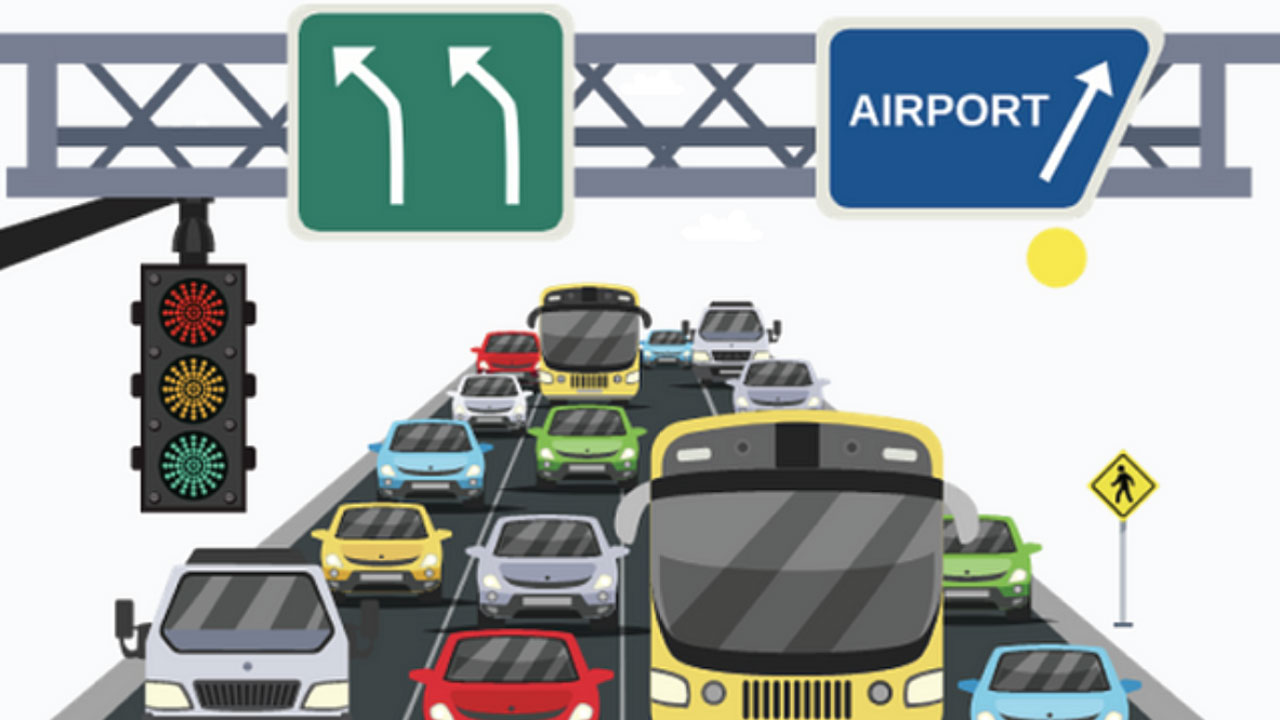
THE ECONOMIC IMPACT OF TRAFFIC CONGESTION IN DHAKA AND POTENTIAL SOLUTIONS
Traffic congestion in Dhaka has become a formidable challenge, hampering economic growth, reducing productivity, and burdening both individuals and businesses. With data from research papers, government reports, and social platforms like “Traffic Alert,” this feature explores the severity of traffic jams in the city and proposes actionable solutions to alleviate the economic strain.
The Cost of Gridlock
Dhaka, the capital city of Bangladesh, is notorious for its severe traffic congestion. Every day, millions of commuters are trapped in hours of gridlock, while businesses and the economy feel the pressure of lost productivity. According to various studies and reports, traffic congestion in Dhaka has reached critical levels, with daily commuters spending up to four hours in traffic, which significantly impacts the nation’s economy. This feature takes a deep dive into the economic ramifications of this issue and suggests possible solutions.
The Scale of the Problem: An Inescapable Reality
Dhaka’s rapid urbanization has brought with it a surge in the number of vehicles, infrastructure that has failed to keep pace with population growth, and a breakdown of traffic management systems. A study by the Centre for Policy Dialogue (CPD) found that Dhaka’s traffic congestion costs the economy approximately $4 billion per year, a significant loss considering the country’s GDP. The road network, which stretches over 2,000 kilometers, is often gridlocked with a mix of private vehicles, buses, and rickshaws. This overwhelming volume of vehicles creates not just delays, but an increase in fuel consumption, environmental degradation, and a decline in overall quality of life.
Research from the South Asian Network on Economic Modeling (SANEM) highlights that traffic congestion reduces national productivity by cutting into working hours, raising business costs, and impeding the flow of goods and services. The economic losses are compounded by the environmental costs of pollution, which are aggravated by the slow-moving traffic.
Economic Impact: A Burden on Productivity
The impact of traffic congestion extends far beyond the frustration felt by commuters. As businesses struggle with delayed deliveries, missed meetings, and an inefficient workforce, the economic consequences are significant. According to a report from Dhaka University, the time lost in traffic could be better spent on productive activities, potentially contributing billions of dollars to the economy if managed effectively.
Key Economic Impacts of Traffic Congestion
Loss of Productivity: Commuters spend an average of four hours per day in traffic. This lost time is directly linked to decreased productivity, especially for workers who rely on transportation to reach their places of employment. Many businesses report significant delays in operations and project timelines, which directly influence profitability.
Increased Business Costs: Traffic congestion leads to higher transportation costs for both businesses and consumers. The transportation of goods becomes more expensive due to the longer travel times, leading to higher prices for goods and services. Furthermore, businesses also face increased fuel expenses for both their workforce and delivery vehicles.
Health Costs: The prolonged exposure to vehicle emissions in congested traffic leads to a decline in public health. Respiratory illnesses and other health problems are on the rise due to the high levels of air pollution caused by slow-moving traffic. This places an additional burden on the healthcare system and further impacts productivity, as workers are often absent due to health-related issues.
Impact on Foreign Investments: Foreign investors are likely to be deterred by the inefficiency of the road network. Dhaka’s inability to provide a reliable transport system could hinder economic growth by discouraging foreign companies from setting up businesses in the region.
Social Media’s Role in Traffic Awareness: The ‘Traffic Alert’ Facebook Page
In the digital age, social media has emerged as a key tool in providing real-time updates on traffic conditions. In Dhaka, the “Traffic Alert” Facebook page has become a critical source of information for commuters. The page offers updates on traffic conditions, roadblocks, and suggestions for alternate routes. By sharing live reports, pictures, and videos, the page assists commuters in making informed decisions about their travel.
While this service helps ease some of the immediate frustrations of traffic, it is not a long-term solution. The larger issue—of an inadequate and overwhelmed infrastructure—remains unresolved. However, platforms like “Traffic Alert” contribute to a heightened sense of collective responsibility, urging drivers to adopt safer driving practices and follow traffic regulations, ultimately supporting a smoother flow of traffic.
Government and Private Sector Initiatives
The government of Bangladesh has acknowledged the critical nature of traffic congestion in Dhaka and has proposed several measures to tackle the issue. One such initiative is the construction of the Dhaka Elevated Expressway, which is expected to significantly reduce travel time in key areas of the city. Additionally, the development of new roadways and public transportation systems like the Dhaka Metro Rail is underway. These projects, though ambitious, are expected to alleviate congestion in the long term.
Another positive development is the government’s push for digital toll systems to manage traffic more effectively. By implementing tolls based on vehicle volume, the government aims to reduce the number of cars on the road during peak hours. Furthermore, the introduction of ride-sharing services has provided an alternative to private vehicle ownership, potentially reducing the overall number of cars on the road.
Private sector initiatives, such as investment in infrastructure development and public transport systems, also play a vital role in reducing congestion. Companies like Uber and Pathao are helping to streamline transportation by offering more efficient, less congested alternatives to traditional taxis.
Learning from South Asian Cities: Lessons for Dhaka
Dhaka can look to other South Asian cities that have successfully tackled traffic congestion for valuable lessons and strategies to improve its own situation. For instance, Mumbai, India’s financial capital, has implemented several initiatives that Dhaka could adopt. The Mumbai Metro system, launched in phases, has drastically reduced road congestion by providing a reliable alternative to private car use. Additionally, Mumbai has employed a series of road-traffic management strategies, including dedicated bus lanes and improved enforcement of traffic regulations, which have streamlined the flow of vehicles, reduced delays, and boosted the efficiency of public transport.
Similarly, Colombo, Sri Lanka’s capital, has made significant strides by investing in light rail systems and a comprehensive public transport network. The city’s commitment to reducing the dependency on private vehicles by prioritizing public transport and integrating smart traffic systems has resulted in reduced congestion, improved air quality, and increased economic activity.
Dhaka could take inspiration from these cities by accelerating the development of its metro rail project and expanding its bus rapid transit system (BRT). Moreover, incorporating smart traffic solutions like congestion pricing and enhanced traffic monitoring systems could optimize the flow of vehicles, as seen in Karachi and Kathmandu, where real-time data helps control traffic bottlenecks. These approaches not only alleviate congestion but also improve overall urban mobility, leading to more productive cities.
By looking at the success of other South Asian cities, Dhaka can adopt similar frameworks that prioritize sustainable and efficient transportation, making it a more livable and economically viable metropolis for its citizens.
Proposed Solutions: A Multidimensional Approach
To mitigate the economic impact of traffic congestion, a comprehensive approach is needed. Here are several strategies that could help ease the burden on Dhaka’s infrastructure:
Expansion of Public Transportation: Investment in mass transit systems like the Dhaka Metro Rail and bus rapid transit (BRT) systems will encourage people to shift from private cars to public transportation. This would not only reduce traffic congestion but also lower carbon emissions and decrease fuel consumption.
Urban Planning Reforms: Dhaka needs to adopt more effective urban planning strategies that prioritize pedestrian and cyclist-friendly infrastructure. Expanding walkways, bike lanes, and developing areas that are easily accessible by public transport can reduce the reliance on cars.
Promotion of Ride-Sharing: Encouraging carpooling and the use of ride-sharing services can significantly reduce the number of private vehicles on the road, particularly during peak hours. The government can incentivize such services through policy reforms, discounts on tolls, and designated ride-sharing lanes.
Congestion Pricing: The implementation of congestion pricing can manage traffic flow by charging vehicles to enter the most congested parts of the city. This would encourage drivers to use alternative routes or travel at less busy times.
Smart Traffic Management Systems: The installation of smart traffic lights and cameras could help optimize traffic flow, reducing delays and increasing efficiency. These systems could provide real-time data to help manage traffic in the most congested areas.
Conclusion: A Path Forward
Dhaka’s traffic congestion is a multifaceted issue with far-reaching economic implications. The city’s infrastructure is struggling to keep pace with its growing population and vehicle numbers, leading to losses in productivity, increased business costs, and negative environmental impacts. While the government and private sector are taking steps to address the problem, more needs to be done. A combination of expanded public transportation, smart traffic management, urban planning reforms, and ride-sharing initiatives could help alleviate the congestion that currently plagues Dhaka. With continued investment and policy changes, Dhaka can transform its road network into a more efficient, sustainable, and economically productive space.
Sources:
Centre for Policy Dialogue (CPD) Report, 2020
South Asian Network on Economic Modeling (SANEM) Report, 2021
Dhaka University Research Papers on Traffic and Urbanization, 2019
Traffic Alert Facebook Page
“Dhaka’s Traffic Crisis: Causes and Solutions” – Daily Star, 2021
Government of Bangladesh: Dhaka Metro Rail and Expressway Projects