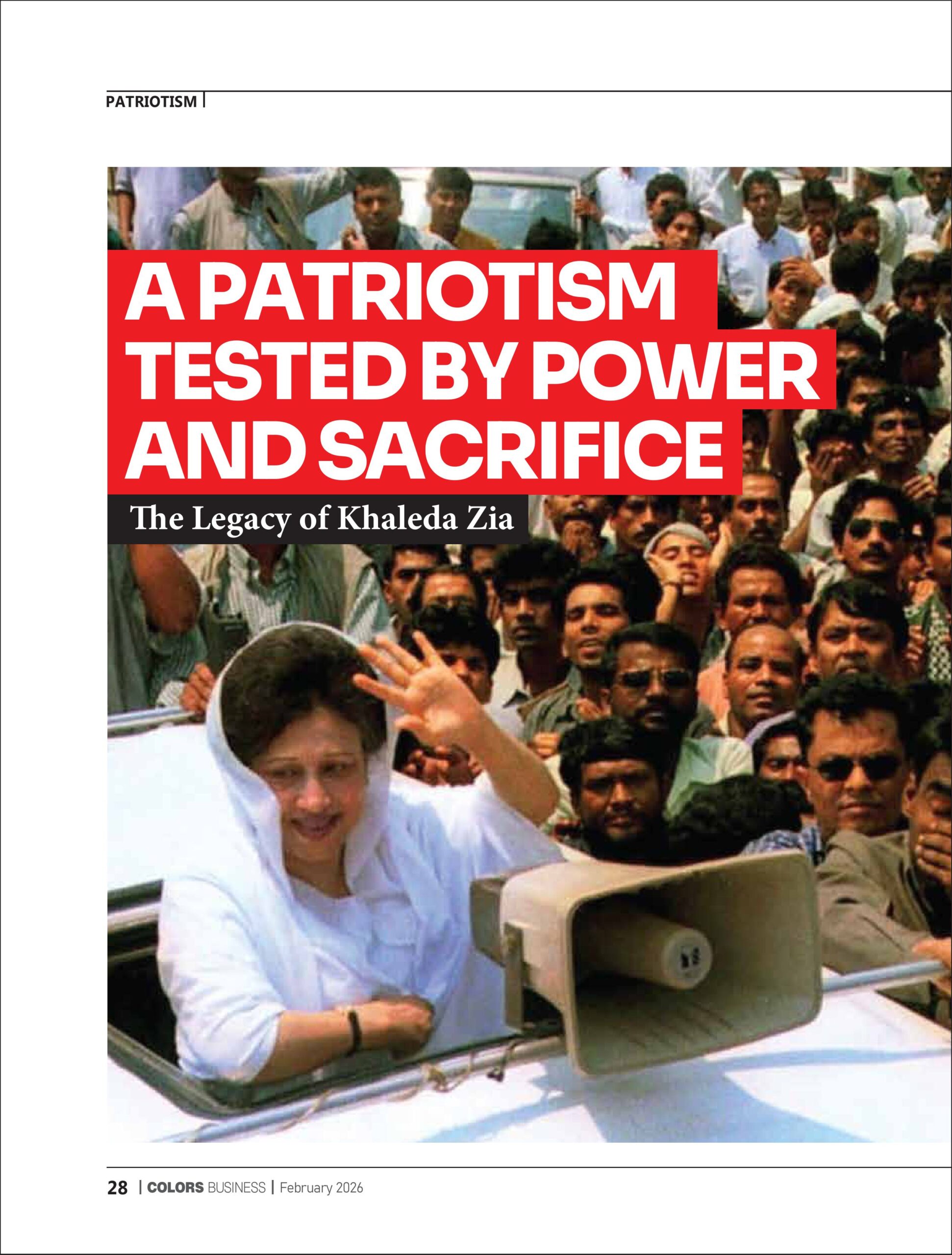
A Patriotism Tested by Power and Sacrifice: The Legacy of Khaleda Zia
M Rasheduzzaman Millat
Patriotism is more than sentiment; it is devotion tested by sacrifice. While many profess love for their country, very few prove it through the trials of their own lives. Begum Khaleda Zia belongs to that rare category of leaders who not only devoted her life to the nation, but also endured profound personal loss in the name of patriotism.
Guided by an unwavering sense of duty, she refused to leave the country even under intense pressure. She herself became a victim of state injustice, suffering from serious physical ailments and being denied proper medical treatment during a hostile political period. She bore these hardships with resolve. The toll was devastating: she lost her child and witnessed the persecution of her son, Tarique Rahman, under state-sponsored repression. Yet she did not yield. She placed the country above personal grief and political compromise.
Most importantly, while in office, she never exerted political pressure on economic decision-making. Former finance minister Saifur Rahman stated on numerous occasions that he never faced political interference from her. On the contrary, she encouraged him to take independent decisions in the best interests of the economy. Such restraint was rooted in her deep patriotism and respect for institutional integrity.
An example illustrates the nature of her leadership. During a period of acute electricity shortages, a proposal was placed before her to establish a floating power plant to generate electricity quickly. She responded by committing to ensure at least 2,000 megawatts of additional generation, but insisted it be gas-based. Her reasoning was clear: gas-based generation would allow electricity to be supplied gradually across districts without wasting scarce foreign currency on imported oil. She rejected oil-based quick rental power plants because of their excessive costs and long-term burden on public finances.
She calculated that gas-based electricity would cost just over Tk 2 per unit, whereas oil-based generation would cost around Tk 8. Spending public money at such inflated rates, she believed, would amount to a misuse of the people’s resources. On this basis, she refused the proposal. Her decisions were guided not by expediency, but by foresight and fiscal responsibility.
When Begum Zia first assumed office in 1991, the economy was in a fragile state, weakened by widespread corruption during the Ershad era. Large sums had been squandered on poorly conceived projects, banks were distressed, and poverty had deepened. Confronted with this reality, she consulted widely and worked closely with her finance minister to chart a recovery strategy.
A critical priority was the expansion of electricity supply, essential for economic revival. She sought to harness Bangladesh’s natural gas resources to meet this need. While this effort was under way, she faced the controversial election of February 15, after which a parliament existed for only 29 days solely to facilitate the establishment of a caretaker government. Many mistakenly believed she sought to cling to power. In reality, the caretaker system did not exist in the constitution at the time; she created it and then relinquished power voluntarily.
When she returned to office in 2001, she renewed efforts to explore and extract natural gas to fuel industrial expansion. As these initiatives gathered momentum, GDP growth began to rise steadily.
Her vision of development extended well beyond urban centres. To strengthen rural infrastructure, she prioritised women’s education, recognising it as a foundation for social and economic progress. To ensure sustainability, she made education for women free up to the intermediate level.
Though she entered governance from domestic life, her patriotism enabled her to meet every challenge with distinction. She also benefited from having closely observed another towering patriot — her husband, President Ziaur Rahman. From him, she learned to understand the real needs of the people. Ziaur Rahman emphasised agriculture, focusing on increasing domestic production rather than reliance on imports, and prioritised irrigation through canal excavation.
Begum Zia sought similarly to meet national needs through the responsible extraction and use of natural gas. She made sustained efforts to locate gas reserves and succeeded, ensuring tangible benefits for the people.
She governed the country as she ran her household with frugality, care and attentiveness. In her personal life, she was modest and restrained. In governance, she listened carefully to senior leaders and engaged directly with ministers before making decisions. Many believed she enjoyed divine favour, but it was her patriotism that earned her the people’s trust and affection.
After her death, the depth of public love for her became unmistakably visible. Though she is no longer among us, her patriotism and unwavering resolve endure. She will remain alive in the hearts of millions, a leader remembered not only for power held, but for principles upheld.