THE PRICE GAP
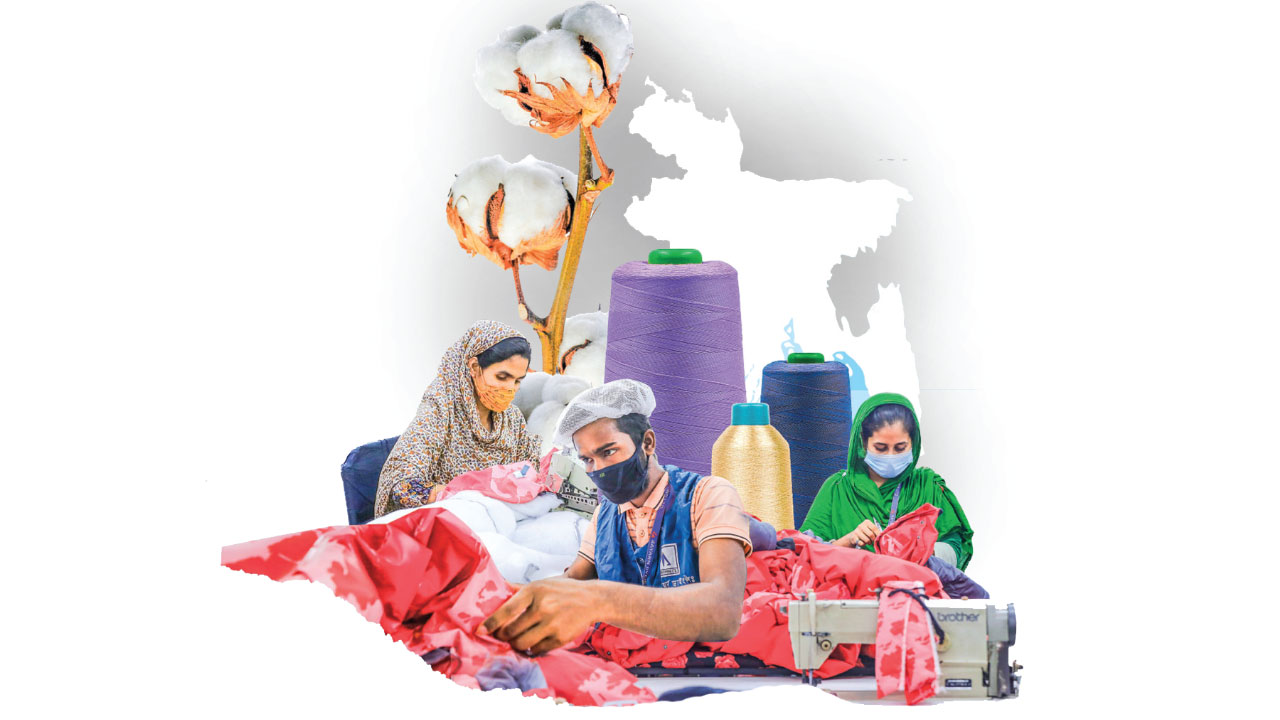
Despite making significant strides in improving the quality of its apparel exports, Bangladesh continues to receive considerably lower prices in the global market compared to its competitors. A study conducted by the private think tank, Research and Policy Integration for Development (RAPID), based on data from the EU Comext and US ITC databases, reveals that Bangladeshi exporters are paid 32 to 83 percent less than suppliers from other countries for similar products.
Although Bangladesh is the second-largest apparel exporter globally, after China, its unit value prices (UVP) for garments remain far below those of competitors like Vietnam, India, and Turkey. For example, Bangladesh’s most exported product to the European Union, boys’ cotton T-shirts (with the same HS code), is sold at the lowest unit price despite the country being the dominant supplier. In 2023, Cambodia, also a Least Developed Country (LDC) benefiting from the EU’s Generalised System of Preferences (GSP), secured more than 2.5 times the price for the same product.
A similar price disparity exists in the US market, where Bangladesh’s leading export—men’s and boys’ cotton trousers—commands significantly lower prices than competitors. Despite Bangladesh supplying nearly one-third of this product to the US, its unit price remains among the lowest, while countries like Vietnam, Cambodia, and Turkey receive between 25 and 250 percent higher prices.
WHY ARE PRICES SO LOW?
Experts point to several factors contributing to the pricing gap. While global buyers often cite quality as a reason for lower prices, Bangladeshi manufacturers argue that the quality of their products has significantly improved due to investments in technology and compliance with international standards. However, despite these improvements, the price gap persists.
One major issue is Bangladesh’s focus on cost competitiveness rather than product differentiation, which limits its ability to negotiate higher prices. Additionally, the dominance of large multinational buyers with significant bargaining power constrains price adjustments. Furthermore, the lack of branding and limited integration into higher-value market segments prevents Bangladeshi exporters from realizing premiums for improved quality.
The EU’s GSP scheme, while providing tariff-free access to Europe, may also contribute to lower prices by making Bangladeshi products more susceptible to importers’ price-setting mechanisms. On the other hand, the US market seems to reward quality improvements better, as reflected in higher prices for Bangladeshi apparel.
PRICE GAP FOR QUALITY -ADJUSTED APPAREL
The study shows striking figures for the pricing gap. In the EU market, Bangladesh’s quality-adjusted unit value prices for key apparel items are just 7 to 41 percent of China’s prices. Compared to Vietnam, Bangladesh earns significantly less—if Bangladesh were paid the same quality-adjusted prices as Vietnam in the EU, it could earn 35 to 140 percent more for its top apparel exports.
Bangladesh’s average quality-adjusted price in the EU stands at $3.94 per unit, well below the global average of $8.79. Even Cambodia secured an average quality-adjusted.