Bringing stability to the banking sector
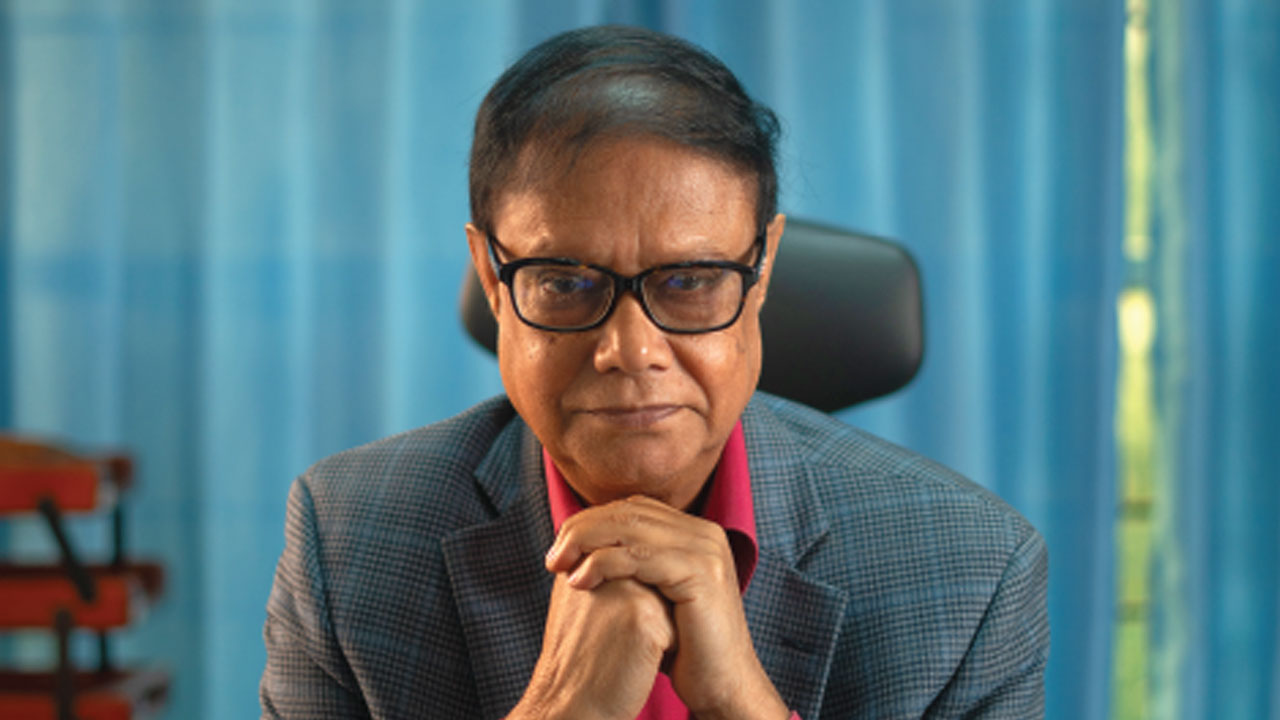
In the face of economic turbulence, Dr. Ahsan H. Mansur, the newly appointed Governor of Bangladesh Bank, has taken decisive steps to restore financial stability and institutional integrity. Since assuming office in August 2024 as the 13th governor, Dr. Mansur has made it clear: Bangladesh Bank must reclaim its autonomy, strengthen governance, and lead meaningful reforms to rebuild trust in the financial system.
Stabilising the Foundation
Speaking exclusively to Zakaria Masud, publisher of Colors Business, Dr. Mansur shared insights into his immediate priorities, which included stabilising dwindling foreign currency reserves and clearing a $2.5–3 billion backlog in unpaid external obligations. “We have stabilised the reserves, and they are now gradually increasing,” he said. Over the past eight months, the central bank has avoided dollar sales and instead focused on building reserves through strategic purchases.
This approach has already yielded results. Inflation, once running at 12 percent, has come down significantly—with food inflation now just over 8 percent. The governor aims to bring overall inflation to 7–8 percent by June 2025 and below 5 percent by early next year.
A Multipronged Economic Strategy
To sustain macroeconomic stability, Dr. Mansur is pursuing a disciplined approach: boosting imports to ease supply-side inflation, containing public expenditure, and ending excessive money printing. “We must not allow macroeconomic instability,” he stated firmly.
As of now, the country’s official reserves stand at around $26 billion, though IMF methodology places the figure at $22 billion. Dr. Mansur defended the central bank’s use of reserves to support strategic domestic investments, dismissing criticism of mismanagement.
Rebuilding Trust in Banks
A top priority for the Governor is reviving the country’s banking sector through strict governance reforms. Tk 27,000 crore in liquidity support has been extended to struggling banks. While some institutions have recovered, others may face mergers or require recapitalisation. A new law is being drafted to enforce international standards, enabling temporary state ownership of distressed banks, with the goal of eventual divestment to private—both local and foreign—investors.
“Even struggling banks can turn around with proper governance—just look at EBL and City Bank,” he said.
Dr. Mansur was candid about the exploitation by vested business groups, such as S Alam Group, which had severely impacted several banks. Still, he remains committed to protecting depositors and restoring institutional confidence. “We want people to not just trust banks again—but feel proud they helped rebuild them.”
Structural Reforms and Central Bank Autonomy
One of the most ambitious components of his vision is the transformation of Bangladesh Bank into an autonomous body, akin to the Federal Reserve. This would prevent political interference in monetary policy, interest rate decisions, and reserve usage.
The Governor envisions a central bank accountable to Parliament—not the Prime Minister—with independent compliance, separate salary structures, and complete policy freedom. “We’re rebuilding Bangladesh Bank into a fully autonomous institution,” he stated.
Islamic Banking, Remittance, and Capital Flight
Dr. Mansur also discussed plans to consolidate smaller Islamic banks into a second large, well-governed institution, fostering competition and eliminating crony control.
On the remittance front, he noted a recent uptick, driven not by increased overseas earnings, but by a decline in hundi operations. He emphasized governance as the key to further improvement.
While the 2.5 percent incentive on remittance will remain, he believes a unified, market-based exchange rate already offers stronger returns for expatriates. “We don’t want to peg the exchange rate—but we won’t let it collapse either,” he clarified.
He also addressed the critical issue of capital flight, estimating that up to $25 billion exited through formal banking channels, with broader outflows possibly exceeding $100 billion. Teams have been formed to trace these assets and recover them through legal avenues in at least 13 countries.
On Reserve Heist and Legal Recovery
Regarding the 2016 cyber heist that resulted in the loss of $81 million, the Governor confirmed that legal proceedings are ongoing in New York and that an out-of-court settlement could speed up partial recovery. “We believe the Philippine bank involved bears responsibility,” he added.
Looking Ahead
Dr. Mansur introduced new banknotes right before the Eid-ul Adha that reflected the country’s heritage and historic movements—rather than political figures. He viewed this as part of a broader effort to restore institutional credibility.
When asked what legacy he hopes to leave behind, the Governor replied, “I have no grand ambitions. If I can ensure reserves that cover three to four months of imports and restore trust in our institutions, my mission will be fulfilled.”